Blog
Too Hot to Handle: the Human Cost of Heat Waves in the UK
Reading time
:
5mn

Too Hot to Handle: the Human Cost of Heat Waves in the UK

The UK is heading towards the end of a summer which is on course to be the hottest ever recorded; however, the conversation around the impact of heatwaves on people and businesses is certainly not ending anytime soon. The year 2026 has been a one of extremes and smashed records, with some 54 Met Office weather stations breaking their all-time daily maximum temperature records. In this article, we discuss how heat affects the population health, what it means to businesses and how they can prepare, and what we are doing here at the EDHEC Climate Institute to provide tools and data to help.
Unlike its southern neighbours, the UK hasn’t previously needed to develop customs, habits and ways of working that take into account months of prolonged hot weather. Nations in Southern Europe, and in the tropical regions, have had centuries to adapt to temperatures that the UK is now experiencing for the first time. Even in ancient Rome, the sexta, from which the later and more popular siesta is believed to derive, was the hour of rest, which corresponded to when the sun was at its highest point and the temperatures highest. Southerners napped during the hottest part of the day, knowing that it would be unproductive, or even dangerous, to labour.
The temperatures and the long and frequent heatwaves the UK has experienced this summer are all phenomena well above seasonal averages, somewhat of a watershed moment for Northern Europe. In a nation whose national pastime is moaning about how miserable the weather is, it’s easy to see why some members of the press have treated the unusual abundance of sunshine and hot weather with levity, showing images of people on the beach and children playing in fountains and claiming global warming might be the best thing since sliced bread…
However, more sober media outlets have used the opportunity to rebuke government for not addressing climate change and adaptation seriously enough, and this is the appropriate tack to take; those cheerful images mask the reality of people, businesses and services struggling to grapple with the heat, to navigate legislations that lack practical guidance, and to provide safe working conditions for employees.
All living organisms have a preferable temperature zone, and we are no different. This “comfort” temperature range is where human bodies require minimum effort to maintain physiological functions. We generate heat through everyday activities, such as walking or lifting weights. To maintain the optimal temperature range, our physiology has developed ways to dissipate excess heat – for example via perspiration. It’s a balancing act between the heat gained from the outside, and heat lost through physiological mechanisms.
Two useful terms to understand why the balance is off and how bodies react are heat stress and heat strain:
An article published in The Lancet set the thermal comfort zone for humans at 17-24 °C, with modest variations depending on relative humidity (Figure 1). Heat strain starts as the temperature exceeds 25 °C, and becomes progressively more severe as temperature and humidity increase, potentially becoming lethal when the red line in Figure 1 is reached. How long the exposure lasts is also a key parameter and a particular important one when discussing hot temperatures in the workplace.
Figure 1 also highlights that the UK doesn't need tropical temperatures to create dangerous heat. By global standards, it is a fairly humid country, surrounded by relatively moist air from the Atlantic and North Sea. The Met Office’s long-term figures put average UK summer relative humidity at around 79–80%. And as temperatures rise, the amount of moisture in the air is rising too, and that makes it harder for the human body to shed heat. In a country unused to sustained high temperatures, even relatively modest heat can become harder to escape when humidity keeps the body from cooling down.
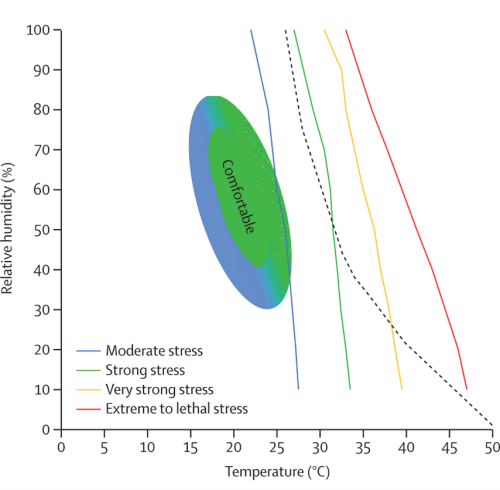
Figure 1: Thermal comfort zone for humans as a function of Temperature and Relative Humidity. The preferable zone is the green shaded area.
Climate change is pushing more people outside of the thermal comfort zone for longer periods of time. This is because global temperatures have risen, heatwaves are becoming more intense, more frequent, and are now affecting areas of the world which were not usually prone to them. Figure 2 shows what a shift in global average temperature means in terms of the occurrence of cold and hot weather.cold and hot weather.
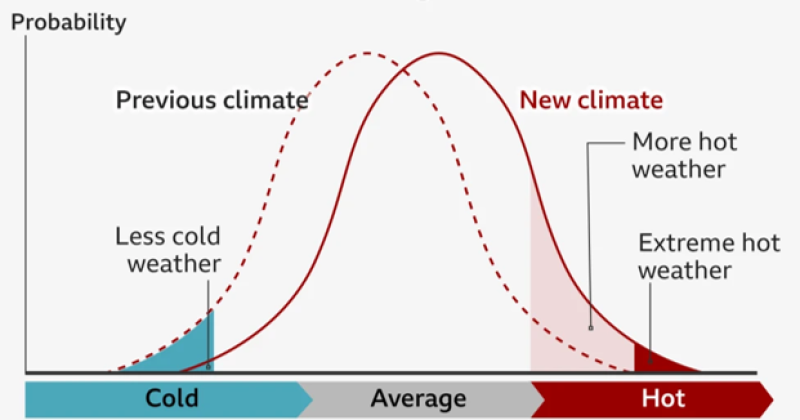
Figure 2: A shift in the average temperature means more hot and extreme hot weather. Image source: BBC News
In the UK, there has been a clear increase in the number of heatwaves/year (Figure 3).
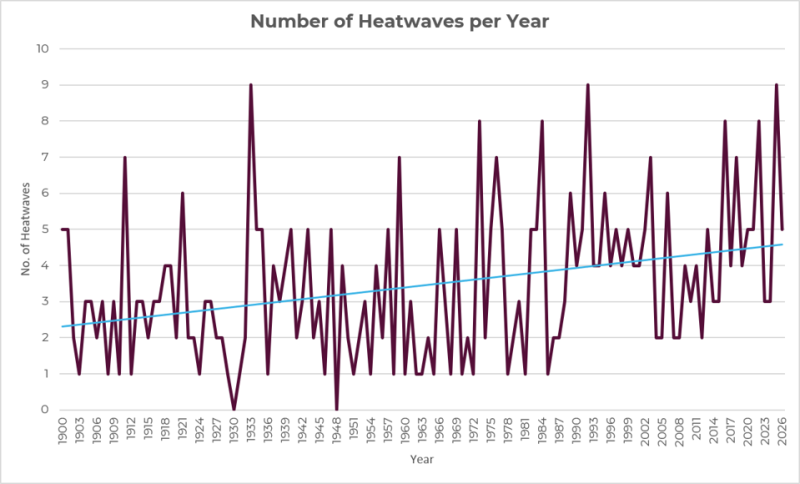
Figure 3: The number of heatwaves per year from 1900 to 2026. The minimum number of heatwaves/year has steadily increased over the years. (Data source: Met Office.)
Besides the proverbial national interest in the weather, what made everyone talk about the heatwaves this summer was the stark realisation that the UK infrastructure is simply not built for hot weather, let alone extreme hot weather. From school closures to train cancellations and MRI-scanners failures, summer 2026 has been a summer of disruptions and of people experiencing high levels of heat strains.
The impact of heat on human health is well documented, although some gaps remain on the impact of chronic exposure.
A body under heat strain will try to regulate its temperature through increased blood flow to the skin and perspiration. The first one increases the demand on the heart, the second progressively leads to dehydration. This why the length of the exposure is as important as the temperature or humidity, since the sustained demand to pump more blood or the sustained loss of body water can lead to severe or even fatal consequences, such as heat stroke or severe dehydration. In extreme cases, the damage to the body, both in terms of physical damage and cognitive impairment, can be long lasting. Furthermore, heat strain is exacerbated by underlying health conditions, use of medications, alcohol or drugs, and pregnancy.
There are also indirect effects. During a heatwave temperatures tend to stay high also during the night, disrupting one’s sleep. Sleep deprivation can impair brain functions, impacting decision making, reaction times, ability to focus, emotional regulation and mental health. As a result of the weather conditions underpinning a heatwave air quality tends to deteriorate, which can of course lead to an increase or deterioration of respiratory diseases.
Figure 4 shows schematically the overall direct and indirect impacts of extreme heat.
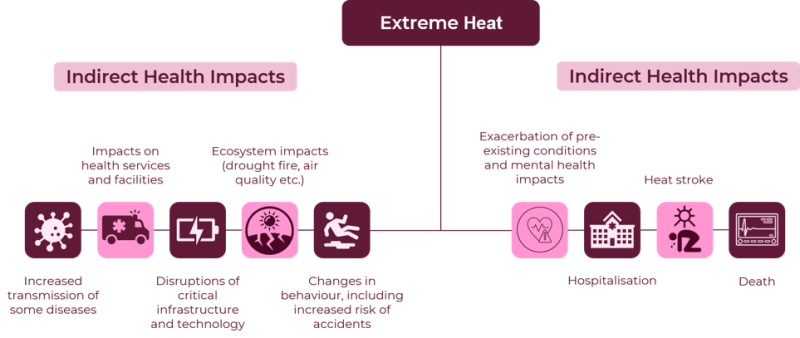
Figure 4 (Source: World Health Organisation): Extreme heat has broad impacts on individuals, ecosystems, infrastructure and services.
The International Society of Biometeorology established a Commission of expert for the development of a Universal Thermal Climate Index (UTCI) which can be used to understand the response of human bodies to temperature under different climatic conditions and clothing, to account for the insulation they provide. The UTCI provides a measure of what temperature “feels like” and is a very useful metric for city planners, health and climate researchers, forecasting services and, potentially, employers. For example, it could be used to estimate heat stress in the construction industry.
Whilst the UTCI is a useful starting point to understanding safety thresholds and comfort conditions, it is also important to remember that every person is different and that difference in physiology can lead to a different response. When planning heat adaptation measures and policies to limit exposure to heat stress, flexibility and inclusivity should be paramount considerations.
One of our newest tools is the ClimaTech project, a taxonomy of climate adaptation and resilience strategies, designed to give investors, employers and legislators a common, evidence-based way to weigh up exposure to a hotter world and what to do about it. Translating thresholds like these into real actions, such as workplace policy, is precisely the gap ClimaTech is built to close, mapping the adaptation measures available to employers against how well they actually perform.
When an individual clocks in in the morning after a hot sleepless night or spends hours on a construction site under the scorching sun, they carry with them the physical and mental burden of a heat strained body throughout the working day. The implications are real and multiple.
It is estimated that the June 2026 heatwave cost the UK economy £1.15 billion in lost output. This was due to a combination of reduced productivity, caused by adjustments to working hours to avoid the worst effects of the heat and absences.
The majority of the workers surveyed also reported health-related impacts, with 3% reporting an accident or injury at work, which they believe was made more likely by the weather conditions. The results are reported in Figure 5. This productivity impact is certainly not confined to the UK: the WHO and WMO estimate outdoor workers lose 2–3% of productivity for every degree the temperature rises above 20°C. The
ILO projects that heat stress could cost the equivalent of 2.2% of working hours worldwide by 2030.
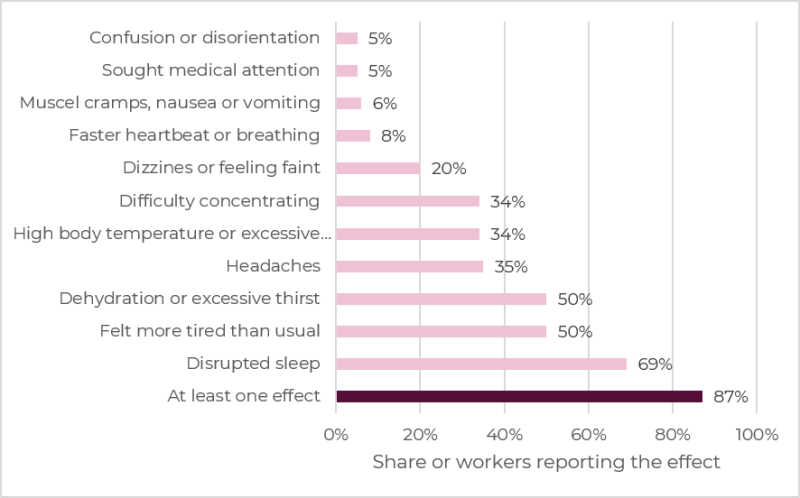
Figure 5: Workers’ self-reported heat-related health effects (Data source: Grantham Research Institute on Climate Change and the Environment).
Extreme heat usually falls outside traditional insurance cover, triggered by physical damage rather than indirect losses. The “soft” damages caused by heatwaves, such as lost sales or reduced customer activities, are therefore not covered. While new insurance models emerge, the gap remains significant and it is estimated that in 2026, across Europe, insurance covered only around 1% of the total economic losses caused by heat-related business disruptions.
The gap looks even more stark on the Continent: an estimated 95% of the economic losses from Europe’s 2025 heatwaves went uninsured, compared with roughly a quarter for storms and floods. Better pricing of that exposure starts with better data.
Employers liabilities are also changing and they range from HR policies to contracts.
In the UK, there is no maximum workplace temperature but employers have an obligation to provide a safe working environment. To reduce the risk of litigation, it is essential to perform a risk assessment and identify mitigation and adaptation actions.
As heatwaves disrupt working patterns and supply chain, contractual obligations may also be at risk, which business insurance doesn’t always cover. Businesses have to review their contractual agreements and adapt them, as heatwaves become normal occurrences during the summer period.
Climate adaptation is a strategic necessity to guarantee business continuity.
Businesses need to understand their specific vulnerabilities to heat: a construction company, whose workforce mostly works outdoors, will have different needs from a company which is mostly office-based. Employee-employer engagement is essential to understand the efficacy of the identified measures. Beyond that, as successive heatwaves become the new weather baseline, a thorough review of contracts and insurance covers can help identify gaps and protect a company from costly economic losses.
EDHEC Climate Institute has developed ClimaTech, the largest database of climate adaptation strategies to support business preparedness in the face of a changing climate. Our database scientifically assesses more than 100 adaptation and resilience measures across 101 asset types – including strategies for extreme heat and wildfire – to inform the decisions of asset managers, investors and public authorities. For investors deciding where to allocate capital and legislators deciding how to set new standards, that kind of comparable, evidence-based scoring is becoming increasingly essential.
ClimaTech is now being expanded to the corporate world, to understand how climate risks affect assets, activities and the workforce, and provide decision makers with the science-backed, evidence-based knowledge to make sustainable strategic decisions.
The summer might be over but the journey to business and workforce resilience starts now.