Blog
From Climate Risk to Investable Resilience: Key Highlights from the FT Climate & Impact Summit
Reading time
:
3mn

From Climate Risk to Investable Resilience: Key Highlights from the FT Climate & Impact Summit
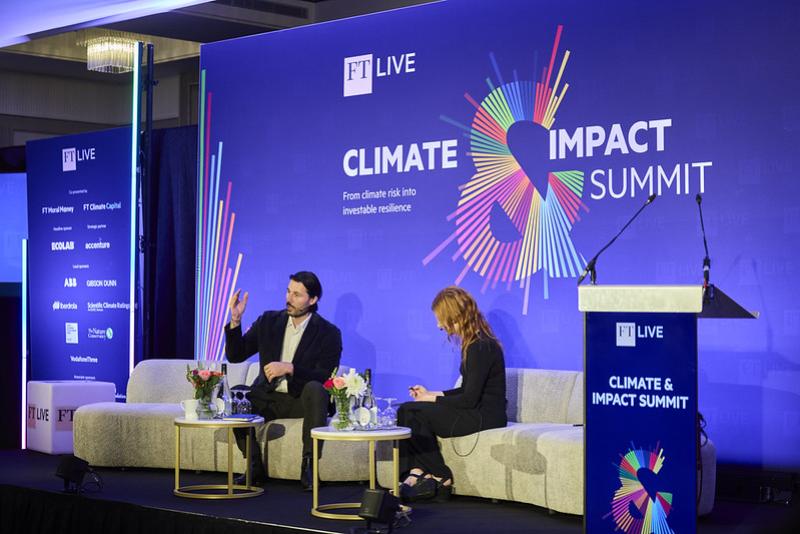
On 17 and 18 June 2026, the Financial Times held its sixth annual Climate & Impact Summit in London. Over the two-day event, scientists, policymakers, and finance professionals shared insights from across the branches of climate action, offering a wealth of resources and tools to help stakeholders unlock meaningful climate mitigation and adaptation.
The EDHEC Climate Institute (ECI) and its Scientific Climate Ratings venture participated in several notable sessions across the event. Scientific Climate Ratings’ CEO Rémy Estran-Fraioli spoke with Simon Mundy about how Scientific Climate Ratings is addressing the challenge of quantifying the materiality of climate risk in universal financial terms. Alexis de Pampelonne, Climate Risk Manager at Scientific Climate Ratings, participated in a panel on ‘turning climate risk into market intelligence,’ which covered the value of equipping stakeholders with decision-useful, financially material insights. Nicolas Schneider then took to the stage for an interview with the FT’s insurance correspondent Lee Harris to discuss the EDHEC Climate Institute’s pioneering sector-specific research into macroeconomic climate damages.
Across the sessions, one message was clear: climate change “poses an existential threat to business models”. Yet, the sessions also stressed that with the right information and data sources, stakeholders across industries and geographies can meaningfully derisk and decarbonise their activities. The EDHEC Climate Institute is dedicated to providing this very information.
In the not-so-distant past, resilience and decarbonisation measures were largely seen as “ESG box-ticking,” according to one speaker. But today, it is undeniable that “climate change poses an existential threat to business models.” Stakeholders recognise that delaying the implementation of resilience and decarbonisation measures will have financially material consequences.
However, while stakeholders are increasingly aware of the materiality of climate risk, it is also clear that they struggle to quantify this risk and justify intervention. In his keynote interview, Scientific Climate Rating’s CEO Rémy Estran-Fraioli stated that climate risk is widely acknowledged but poorly comparable and weakly integrated into financial decisions and valuations, because stakeholders lack a universal financial language in which to communicate the risk.
He shared how Scientific Climate Ratings is addressing this need with its climate risk ratings for infrastructure assets, in the vein of credit ratings. By leveraging established financial tools, stakeholders can easily communicate the extent of climate risk, which improves the likelihood of securing resilience investments.
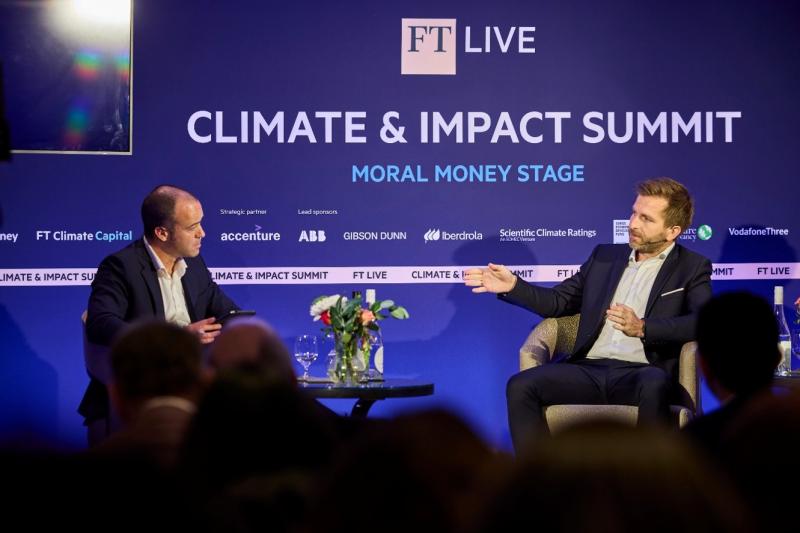
“Risks are first recognised qualitatively, then they are measured quantitatively. Only once they become financially measurable can they be priced and managed at scale,” Rémy Estran-Fraioli, CEO at Scientific Climate Ratings
Alongside the need for comparable risk quantification frameworks, the sessions also converged on the importance of granular climate risk insights. As the EDHEC Climate Institute's Nicolas Schneider stated, "we are swimming in data, but we are not extracting enough information for the data to be relevant" for stakeholders across sectors and geographies. Decision-makers need intelligence that speaks directly to their assets, their sector, and their location.
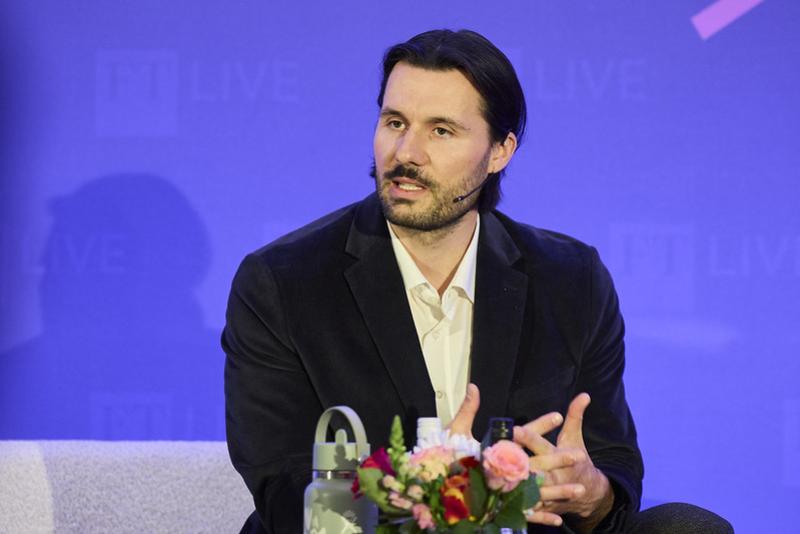
In his keynote interview, Nicolas Schneider spoke of how the true story of physical risk lies in the intersection of space and sectors. Yet, up until recently, there was no research into sector-specific macroeconomic damages, leaving a significant blind spot for asset owners and investors seeking to quantify their exposure with precision. To address this gap, the EDHEC Climate Institute is developing extensive research on the intra-sector distribution of climate impacts on GDP. In this way, stakeholders can future-proof their operations using damage projections that are specific to their activities, rather than relying on broad estimates that may obscure as much as they reveal.
“Granularity allows you to differentiate future losses for assets and companies that are within the same location”, Nicolas Schneider, Senior Research Engineer- Macroeconomist at the EDHEC Climate Institute
Across the events, speakers agreed that we are in a period of “political flip-flopping,” with governments lurching between climate policies. However, the rollback on some climate legislation does not reflect a rejection of climate action at the asset level. Panellists agreed that corporates and infrastructure asset owners recognise client climate mitigation as both “common sense and business sense.” As such, stakeholders are increasingly integrating resilience and decarbonisation measures into their operating models.
In his panel on decision-grade data, Alexis de Pampelonne of Scientific Climate Ratings shared how infrastructure owners and managers are actively seeking out information on their assets’ vulnerability to physical and transition risks and the projected impact on asset value. Leveraging over 20 years of EDHEC Business School research and the ClimaTech database of mitigation measures, the panel discussed how Scientific Climate Ratings has helped clients translate complex climate scenarios, physical hazards, and transition pathways into tangible asset value impacts. By taking into account specific asset boundaries, characteristics, and locations, stakeholders can determine the most cost-effective resilience strategies for their asset and more easily justify investment in such measures.
“Scientific Climate Ratings is bridging the gap between knowing an asset’s exposure, knowing the measures that are available, and quantifying the impact of those measures”, Alexis de Pampelonne, Climate Risk Manager at Scientific Climate Ratings

Unsurprisingly, AI was a recurring theme throughout the conference. Panellists from across the energy, technology, and policy sectors suggested that AI will serve as an important part of the climate change solution set, with the potential to accelerate decarbonisation across industries by improving efficiency and optimising energy systems.
AI can also help to provide granular market insights for decision-makers to address the identified knowledge gaps. For instance, Rémy Estran-Fraioli spoke of how Scientific Climate Ratings is leveraging AI to scrape vast amounts of data and plot the exact coordinates of infrastructure sites, resulting in highly specific, data-driven insights into individual assets.
While the debate surrounding the emissions associated with data centres continues, it is clear that AI will have a role to play in decarbonisation and climate resilience.
The FT Climate & Impact Summit made one thing clear: the question is no longer whether climate risk is financially material, but how quickly stakeholders can acquire the tools to measure and mitigate this risk. The EDHEC Climate Institute and Scientific Climate Ratings are committed to providing exactly these resources. ECI and its ventures translate complex climate data into the decision-grade, asset-level intelligence that investors, asset owners, and policymakers need to future-proof their activities. The knowledge gap is closing; the window for action remains open.