News
Art & Climate: EDHEC Climate Institute Explores the Growing Threat Climate Change Poses to Cultural Heritage
Reading time
:
2mn

Art & Climate: EDHEC Climate Institute Explores the Growing Threat Climate Change Poses to Cultural Heritage
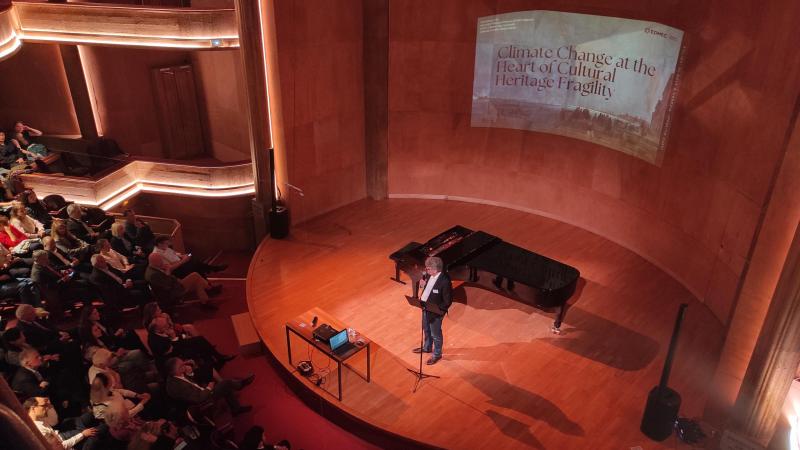
On May 4, the EDHEC Climate Institute, in partnership with Campus delle Arti, hosted an exceptional evening at Salle Cortot in Paris bringing together researchers, professionals, artists, and cultural stakeholders around a pressing but still underexplored issue: the impact of climate change on cultural heritage.
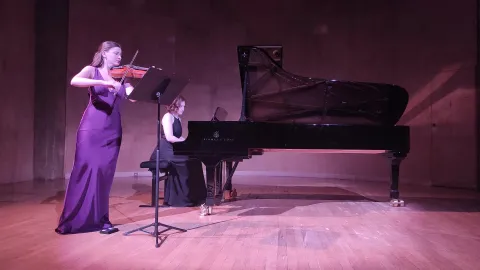
More than 200 participants attended the event, which combined scientific insight and musical performance through a conference entitled “Human Works, Changing Climates” presented by Professor Noël Amenc, followed by a concert by violinist Lora Markova, winner of the Campus delle Arti 2025 Prize, accompanied on piano by Alexandra Stychkina. Already recognised on major international stages, including Carnegie Hall in New York, Lora Markova is widely regarded as one of the most promising young violinists of her generation.
The conference highlighted how climate change is increasingly threatening not only ecosystems and economies, but also works of art, historical monuments, archaeological sites, musical instruments, and cultural infrastructure.
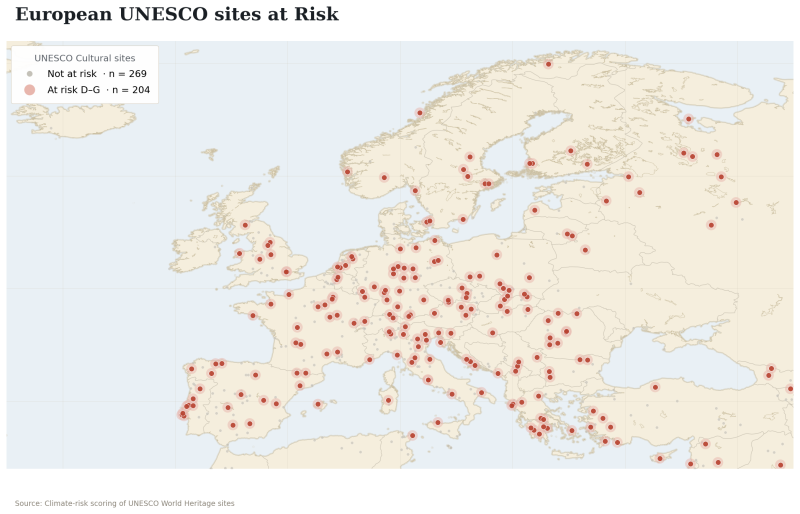
Research presented by the EDHEC Climate Institute showed that 43% of UNESCO World Heritage sites in Europe are currently highly exposed to climate-related risks, including flooding, extreme heat, sea-level rise, and wildfires.
The presentation also underlined that more than 60% of remarkable artworks and cultural assets are not adequately protected against climate-related degradation, despite growing exposure to humidity, thermal stress, acid rain, and other chronic physical risks.
One of the key themes developed during the evening concerned the limits of traditional economic approaches when dealing with non-substitutable cultural goods.
While standard economic models often assume that damaged resources can eventually be replaced through investment, technology, or economic growth, the destruction of cultural heritage raises a fundamentally different issue: irreversibility.
A deteriorated fresco, a submerged archaeological site, or the disappearance of historical concert venues cannot simply be recreated or substituted.
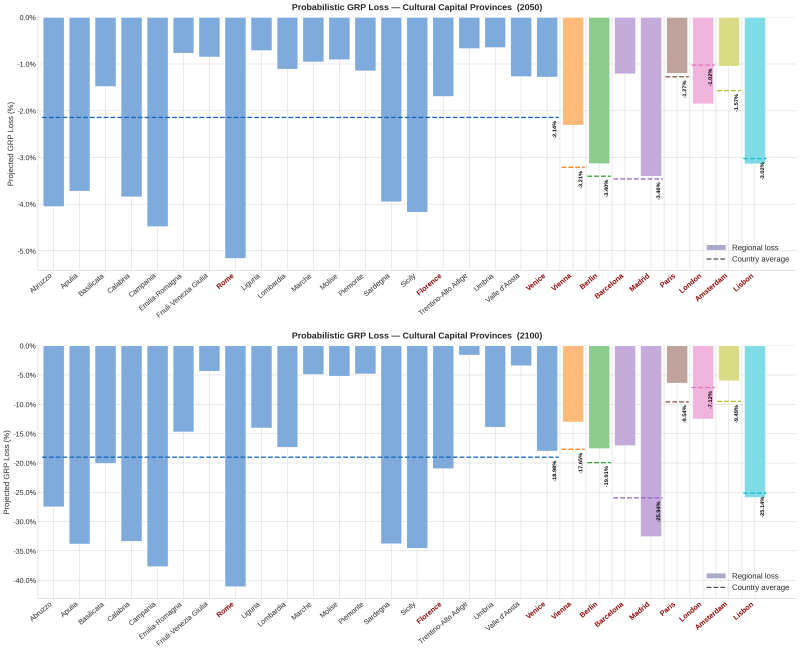
The discussion therefore raised broader questions about precaution, long-term preservation, and the economic capacity of societies to finance cultural protection in a context of increasing climate-related losses.
The evening also explored the relationship between climate change and music itself.
The research presented highlighted how climate change already affects the natural materials used in instrument making, including resonance spruce, Balkan maple, and pernambuco wood. Concert venues are also increasingly exposed to climate-related threats, particularly in coastal or high-temperature environments.
These scientific insights resonated particularly strongly during the musical performance that followed the conference, illustrating the tangible connection between climate risk and cultural transmission.
By bringing together climate research, economics, philosophy, and artistic expression, the event reflected the EDHEC Climate Institute’s ambition to broaden the discussion around climate risk and its long-term societal implications.
The evening also highlighted the importance of interdisciplinary dialogue in understanding climate change not only as an environmental or financial issue, but also as a cultural and civilizational challenge.
We are pleased to share the materials presented during the event:
• “Human Works, Changing Climates” presentation – Professor Noël Amenc
The presentation explored the growing exposure of cultural heritage to climate risks, including the finding that 43% of UNESCO World Heritage sites in Europe are already highly exposed to climate-related threats, as well as the long-term economic implications for Europe’s major cultural capitals.
• Concert programme
Discover the musical works performed during the concert by violinist Lora Markova, winner of the Campus delle Arti 2025 Prize, accompanied on piano by Alexandra Stychkina. Already recognised on international stages, Lora Markova is emerging as one of the most promising young artists of her generation.
• EDHEC Climate Institute Overview
To learn more about the Institute’s research activities and strategic areas of development in climate risk.