Climate Innov – EDHEC Wildfire Risk Modelling Scientific Partnership
A Strategic Collaboration to Advance Wildfire Risk Modelling

Climate Innov – EDHEC Wildfire Risk Modelling Scientific Partnership
A Strategic Collaboration to Advance Wildfire Risk Modelling

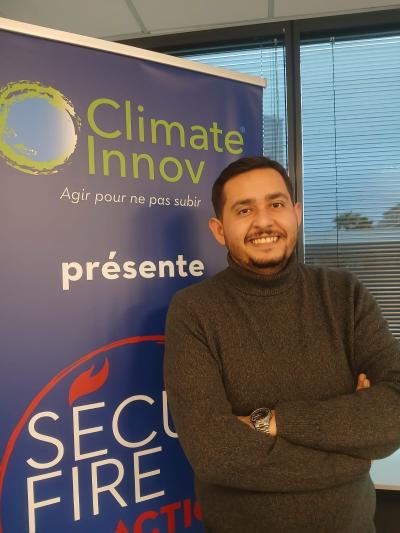
Climate Innov is a research-driven technology company bringing together scientists, engineers, developers, and designers united by a commitment to scientific excellence and innovation. Their shared mission is to apply advanced science and technology to solve complex environmental challenges and strengthen global resilience.
The company develops intelligent software solutions for environmental risk assessment, alerts, and decision-making, supporting a wide range of strategic domains from civil security to private-sector decision makers. For emergency services, Climate Innov provides advanced solutions for wildfire detection, prediction, and spread modelling, and is expanding its capabilities to flood risk. Its operational tools - such as SecuFire Action - empower fire commanders, local authorities, and planners with faster, data-driven insights for prevention, response, and land-use planning.
The company collaborates closely with EDHEC Business School’s research centers leveraging scientific expertise to produce robust, actionable climate-risk modelling outputs.
With a strong scientific foundation and a culture of innovation, Climate Innov develops technologies that help protect lives, ecosystems, and infrastructure while contributing to the broader transition toward climate resilience.
Founders:
Contact: [email protected]
EDHEC Climate Institute and Climate Innov have launched a strategic partnership to co-develop next-generation approaches for assessing physical climate risks, starting with wildfire risk.
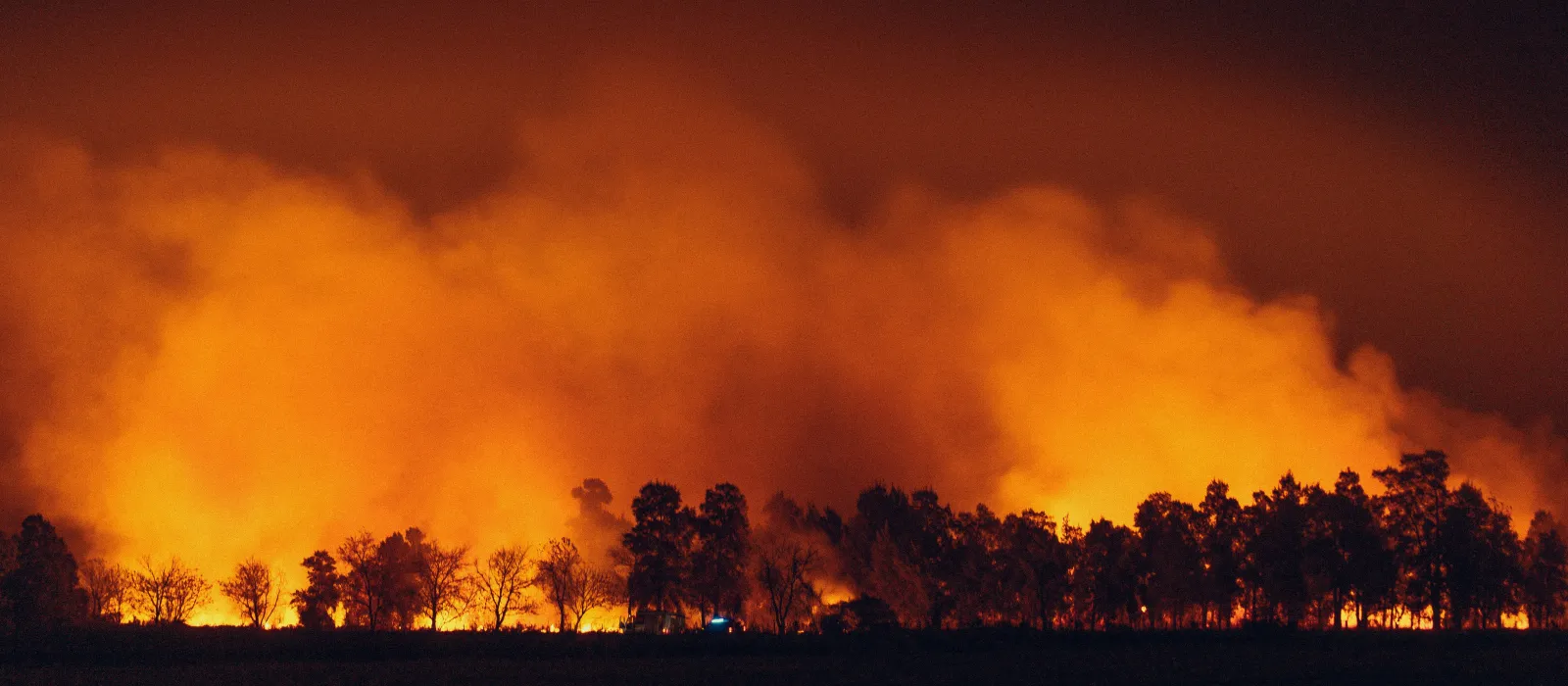
Wildfires are increasing in frequency and intensity under climate change, with significant consequences for ecosystems, infrastructure, and financial stability. Yet, existing indicators often rely on proxies or simplified assumptions that fail to capture the complexity of future wildfire behaviour.
By combining the Institute’s scientific expertise in climate-risk modelling with Climate Innov’s advanced data capabilities, the partnership aims to build methodologies that better reflect future climatology and climate risk modeling and translate climate information into robust, decision-useful metrics for investors and risk managers.
This multi-year strategic partnership focuses on creating a scientifically grounded and operational framework for assessing wildfire risk under climate change. The overarching objectives are:
1. Develop more realistic wildfire risk metrics
Creating future-looking indicators that estimate wildfire occurrence probabilities at regular time horizons throughout the century.
2. Consolidate the best scientific and industry practices
Building on existing research, identifying suitable datasets, and evaluating the most appropriate modelling approaches.
3. Advance Existing Approaches with AI and Machine Learning
Moving beyond simplified indices and static parameters to incorporate richer climate information—including geospatial data -dynamic drivers, AI and machine learning capabilities, and scientifically validated methods.
4. Generate transparent and actionable outputs
Developing real-time and accurante tools that enable stakeholders to respond effectively to these events. Producing spatial wildfire risk layers aligned with climate scenarios and documenting the technical framework to support reproducibility and future research.
This strategic partnership reflects a shared ambition: to equip investors, policymakers, and organisations with more accurate tools to understand and manage climate risks.
By advancing the science of wildfire risk modelling, the collaboration contributes to the broader effort of improving climate-informed decision-making across the financial sector and beyond.